The First Step to Healthy Living Is in Your Shopping Basket
Before the meal plan, before the recipe, before the smoothie obsession or soup cleanse… comes the shopping list.
If your fridge is a crime scene of beige frozen bits, or your cupboard rattles with processed snacks every time you open it—we see you, Hobnob tin—it’s time for a reset. Not with a diet. But with your trolley.
“The best way to avoid unhealthy eating is to never bring it home in the first place.”
Stat check: Over 50% of calories consumed in the UK come from ultra-processed foods¹—crisps, fizzy drinks, ready meals, and sugar-laden cereals that often masquerade as “whole grain.” But what if you swapped those for simple, nourishing ingredients?
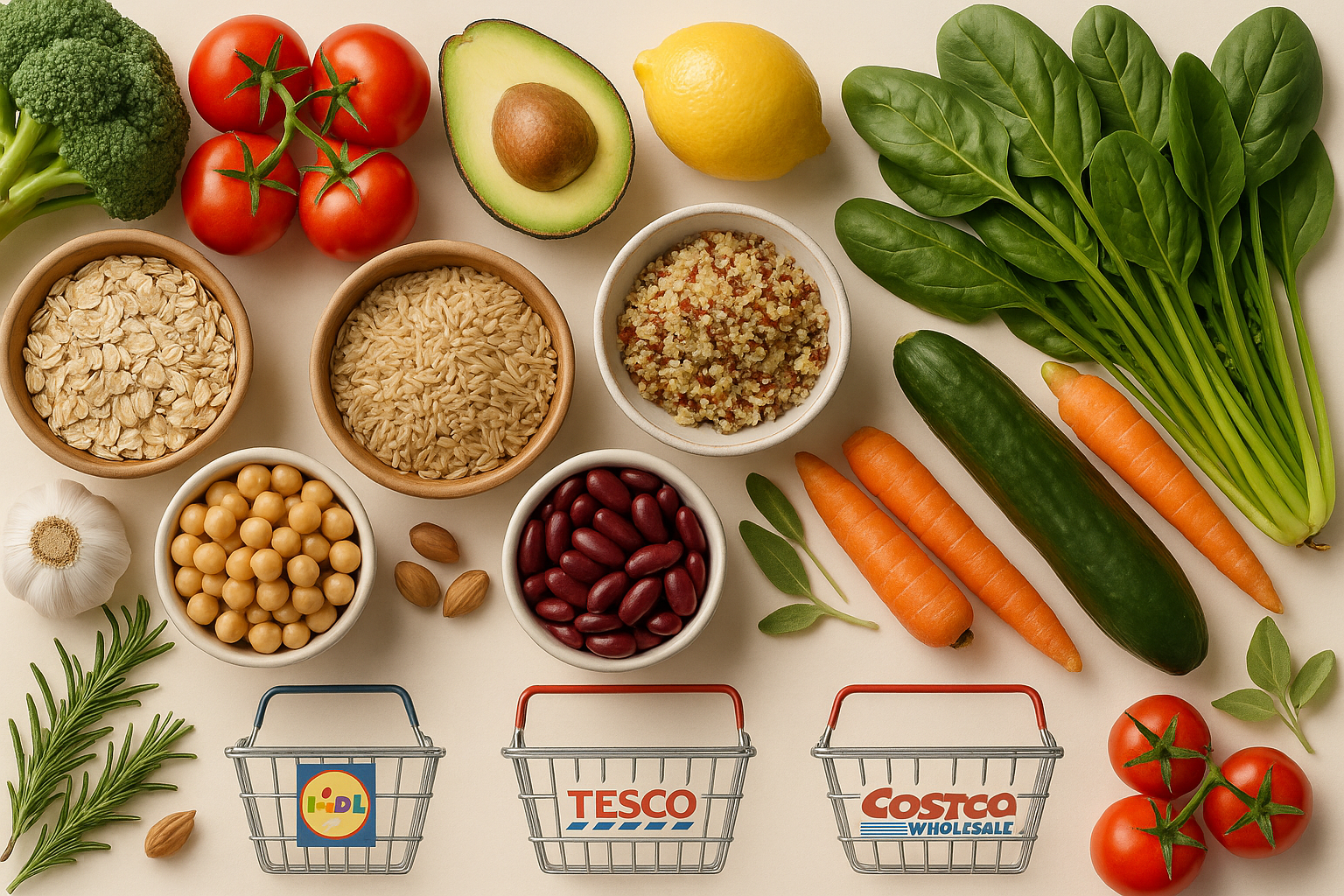
This isn’t about spending hours at a farmer’s market or remortgaging to shop organic. Whether you’re in Lidl, Costco, Tesco, ASDA, or even Aldi, every single store offers real, nourishing food… if you know what to look for.
1. The Golden Rule: Stock What You Want to Eat
Before we jump into the trolley, here’s the Quidian golden rule:
“Don’t bring it home if you wouldn’t want it in your body.”
Think of your kitchen like a garden. What you stock is what will grow—into snacks, breakfasts, late-night fixes, and even how your kids eat. A healthy home makes a healthy habit.
2. Your Wholesome Food Groups: The Foundations of Every Meal
Let’s break this down like a good stir-fry: clear, colourful and sizzling with simplicity. Here’s what you want to load up on—no fads, just real stuff:
🌾 Whole Grains
Whole grains = fuel for the brain and gut²
- Oats (Lidl’s Harvest Morn oats or Tesco Jumbo Oats)
- Brown rice or basmati rice (Costco sells in bulk)
- Quinoa, bulgur, wholewheat couscous
- Wholemeal bread, pitta, wraps (choose >3g fibre per slice)
🥦 Vegetables
If it rots, it’s real. If it doesn’t, be suspicious.
- Fresh produce: broccoli, carrots, courgettes, spinach, bell peppers
- Frozen veg: peas, chopped spinach, sweetcorn (yes, frozen is still nutritious³!)
- Canned tomatoes, passata, mushrooms, beetroot
🍎 Fruit
Sweet, natural energy with built-in fibre.⁴
- Bananas, apples, berries, seasonal fruits
- Frozen fruit: Lidl & Aldi often carry mixed berries for smoothies
- Dried (sparingly): apricots, dates (no added sugar)⁵
🥜 Legumes & Plant Proteins
Beans, beans, the magical… nutrient bombs!⁶
- Chickpeas, kidney beans, lentils, black beans
- Tofu, tempeh, edamame (Costco’s frozen soybeans = win)
- Hummus (Tesco and Lidl do low-fat or olive-oil-based versions)
🐟 Healthy Protein (Animal Sources Optional)
Real protein doesn’t need a long ingredient list.⁷
- Eggs (free-range ideally)
- Tinned sardines, mackerel, tuna in spring water
- Greek yogurt, kefir (plain, unsweetened)⁸
🌰 Nuts, Seeds & Healthy Fats
These tiny things pack a punch.⁹
- Almonds, walnuts, cashews (bulk buy at Costco or Lidl)
- Chia, flax, pumpkin seeds
- Olive oil, avocados, nut butters (just nuts & salt)
3. Where to Shop: Aisle by Aisle in UK’s Favourite Supermarkets
Let’s peek into your favourite UK shops—and show you what to grab.
🛒 Lidl: Affordable, Accessible, Underrated
Lidl Staples:
- Harvest Morn oats
- Green lentils, canned chickpeas
- Tinned sardines in olive oil
- Wholegrain rice & brown pasta
- Organic carrots, spinach, broccoli
- Frozen avocado halves
Quidian Tip: Check Lidl’s weekly specials for Mediterranean ingredients like olives, sun-dried tomatoes, and even kefir!
🛒 Costco: Buy Big, Eat Smart
Costco Wholesome Heroes:
- Bulk quinoa, organic rice, rolled oats
- Greek yogurt tubs
- Wild-caught salmon, chicken breast
- Natural peanut butter
- Organic spinach
- Frozen berries & veggie stir-fry mixes
🛒 Tesco / ASDA / Sainsbury’s: The Mainstream Gems
Tesco Treasure List:
- Tesco Plant Chef range
- Wholemeal wraps, pitta, legume pasta
- Steamed lentil pouches
- No added sugar peanut butter
- ‘Naturally sweet’ cereal (check labels!)
Myth-buster: Even “gluten-free” or “plant-based” snacks can be junk. Always check the label—if it sounds like a chemistry class, back away slowly.¹⁰
🛒 Aldi: Low Budget, High Wins
Aldi Smart Choices:
- Everyday Essentials oats
- Tinned lentils, beans, passata
- Zero salt peanut butter
- Soy milk, almond milk, kefir
- Mixed frozen berries
4. What to Avoid (Or Leave Off Your List Entirely)
“Danger Foods” to Leave Out:
- Sugary breakfast cereals
- Fizzy drinks & juice
- Processed meats (e.g. sausages, bacon)¹¹
- Biscuits, pastries
- Flavoured yogurt
- Microwave ready meals
If your kettle could talk, it would beg you to pair it with a banana instead of a Bourbon biscuit.
5. But What About Snacks and Cravings?
Healthy Snack Swaps:
- Popcorn kernels (air-popped, minimal salt)¹²
- Apple + nut butter
- Homemade hummus + carrot sticks
- Frozen grapes
- Cucumber with chilli + lemon
Conclusion: Your Health Starts at the Supermarket
A healthy life doesn’t start in your doctor’s office. It starts on aisle 3, between the chickpeas and the broccoli.
Make your shopping list your first act of self-care. Choose foods that love you back. Don’t wait for motivation—let the simplicity of a stocked kitchen do the work.
“If it’s in your fridge, it’s already shaping your future meals.”
🛒 Want to turn this list into recipes?
Visit our Recipes Page for wholesome, easy ideas using everything we listed.
References
- Monteiro, C. A., et al. (2019). Ultra-processed foods: what they are and how to identify them. Public Health Nutrition. https://doi.org/10.1017/S1368980018003762
- Harvard T.H. Chan School of Public Health. The Nutrition Source – Whole Grains. https://www.hsph.harvard.edu/nutritionsource/what-should-you-eat/whole-grains/
- British Dietetic Association. Are frozen vegetables as good for you as fresh? https://www.bda.uk.com/resource/are-frozen-vegetables-as-good-for-you-as-fresh.html
- NHS. Fruit and vegetables: benefits. https://www.nhs.uk/live-well/eat-well/5-a-day-what-counts/
- NHS. Dried fruit and dental health. https://www.nhs.uk/live-well/eat-well/food-types/facts-about-dried-fruit/
- British Nutrition Foundation. Pulses and legumes. https://www.nutrition.org.uk/healthy-sustainable-diets/pulses-beans/
- NHS. Protein in your diet. https://www.nhs.uk/live-well/eat-well/food-types/meat-nutrition/
- British Dietetic Association. Probiotics and gut health. https://www.bda.uk.com/resource/probiotics.html
- Harvard Health Publishing. Nuts and your heart: Eating nuts for heart health. https://www.health.harvard.edu/heart-health/nuts-and-your-heart-healthy-snack
- British Heart Foundation. Health Halo Effect: What to watch out for. https://www.bhf.org.uk/informationsupport/heart-matters-magazine/nutrition/health-halo-effect
- World Health Organization. Red and processed meat and cancer risk. https://www.who.int/news-room/questions-and-answers/item/cancer-red-meat-and-processed-meat
- British Dietetic Association. Is popcorn a healthy snack? https://www.bda.uk.com/resource/is-popcorn-a-healthy-snack.html